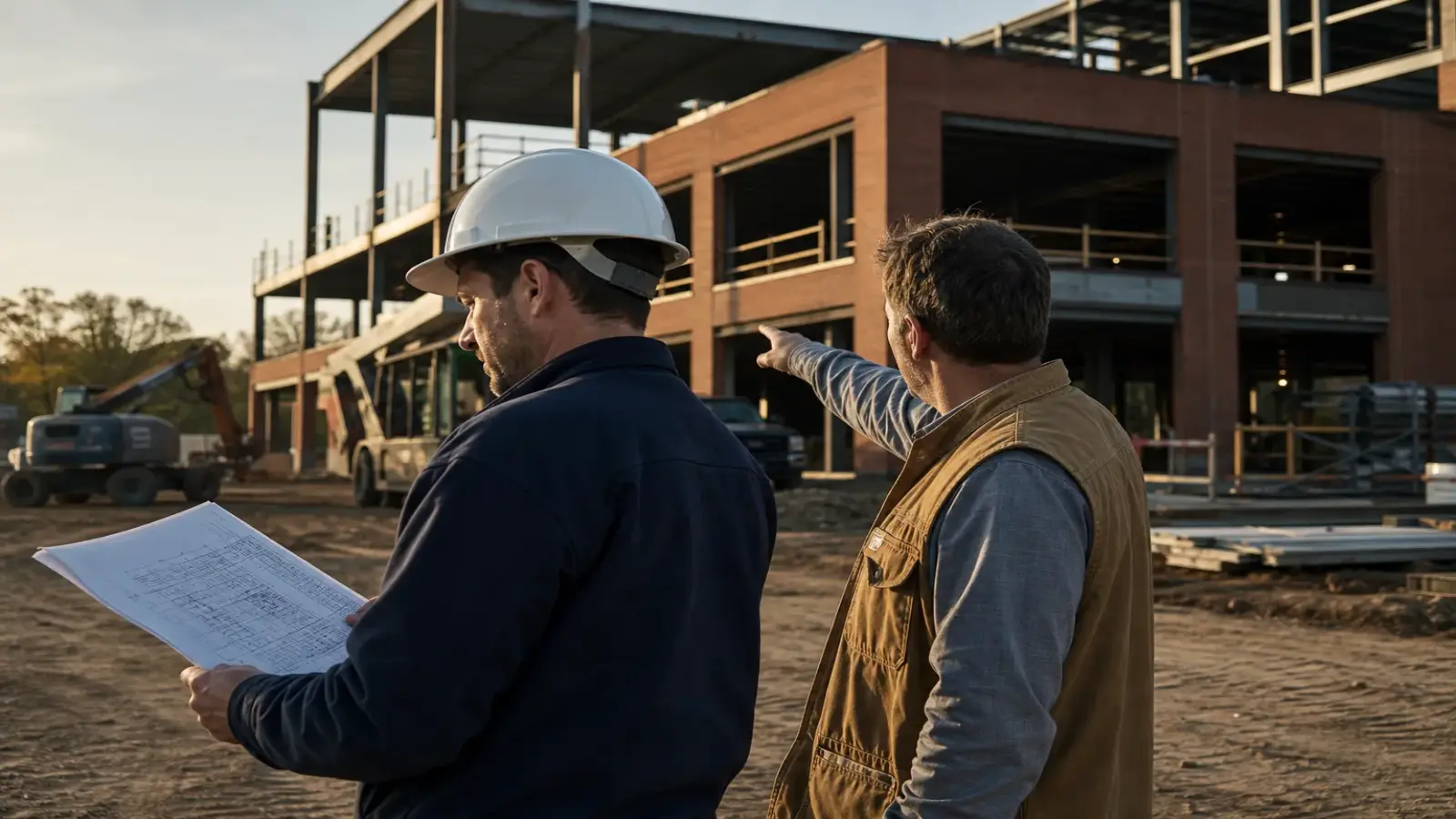
A construction superintendent is the person your owner, your trade partners and your inspectors see every day. Schedule, safety, quality and the mood on the jobsite all run through that seat. When it is filled well, a project manager can manage the contract and the money. When it is filled poorly, everyone ends up doing the superintendent's job, and the project shows it.
That is why superintendent searches deserve more care than a posted job ad. This guide covers how to define the role, what actually separates strong candidates, interview questions that surface real field judgment, and how to close the person you want.
Start with the project, not the title
"Superintendent" means different things at different firms. Before you write a job description, answer a few questions about the work the person will actually run in their first year:
- Project type and size. Ground-up commercial, multifamily, healthcare, industrial, heavy civil and tenant improvement all demand different experience. A strong TI superintendent may struggle on a large ground-up job, and the reverse is just as true.
- Delivery method. Hard bid, CM at risk and design-build put different pressures on the field. A superintendent who has lived through the change-order dynamics of hard-bid work brings different instincts than one who has mostly worked collaborative delivery.
- Self-perform vs. subcontracted. Will they direct your own crews, manage trade partners, or both?
- Team around them. Will they have an assistant superintendent, a field engineer or a dedicated safety lead, or are they carrying all of it?
- Travel and location. A local superintendent who goes home every night and a traveling superintendent on per diem are different searches with different candidate pools.
Write the role around those answers. A tight, honest description attracts the right people and saves you from interviewing candidates who were never a fit.
Superintendent vs. project manager
Many contractors blur these roles, especially on smaller jobs. In a typical split, the superintendent owns the field: sequencing, look-ahead schedules, daily coordination of trades, site safety, quality, inspections and the daily log. The project manager owns the contract: buyout, budget, change orders, submittals, RFIs, billing and the owner relationship on commercial terms.
If you expect your superintendent to also handle buyout or pay applications, say so up front. It narrows the pool, and it affects compensation. If you are hiring both seats, our earlier post on hiring project managers who stay covers the PM side.
What strong superintendents have in common
Résumés list projects. Strong candidates show judgment. Across commercial and civil work, the superintendents who succeed tend to share a few traits.
They plan the work, not just the week
Ask how they build and maintain a three-week or six-week look-ahead, how they tie it to the master schedule, and how they decide what to resequence when a delivery slips. A superintendent who can explain the logic behind a sequence, not just the dates, is thinking like a builder.
They run safety as part of production
Safety culture on a jobsite usually reflects the superintendent. Look for people who talk about pre-task planning, toolbox talks and stopping work when conditions change, not just about having a safety manual. OSHA's construction standards (29 CFR Part 1926) set the federal baseline, and many general contractors and owners require an OSHA 30-Hour Construction card for supervisors. If your clients or your state require it, make it a screening requirement rather than an interview surprise.
They manage trade partners without burning them
The best superintendents hold trades to the schedule and keep them wanting to come back. Ask about a time a trade partner fell behind. You want to hear about early warning, a direct conversation, a recovery plan and documentation, not just escalation.
They document
Daily logs, photo records, inspection reports and written notice of delays protect the company when disputes come later. A superintendent who treats documentation as part of the job saves your PM and your attorney real time.
They communicate up and out
Owners and architects judge your firm partly by how your superintendent runs the weekly meeting and handles a hard conversation. Clear, calm and specific beats charismatic.
Interview questions that surface field judgment
Generic behavioral questions get rehearsed answers. Scenario questions built from your actual work get real ones. A few that work well:
- "Walk me through the look-ahead on your current or last project. What is on it this week, and what are you worried about three weeks out?"
- "Your steel package is two weeks late and the owner wants to hold the turnover date. What do you do in the next 48 hours?"
- "Tell me about the last time you stopped work for a safety reason. What happened next?"
- "A trade partner's foreman disagrees with your sequence in front of their crew. How do you handle it?"
- "What does your daily log include, and who reads it?"
- "Tell me about a punch list or closeout that went badly. What would you do differently?"
Bring your PM or a senior field leader into at least one interview. A superintendent will often speak more openly with someone who has run a site than with HR or an executive.
Check references the right way
Reference checks are most useful when you ask former PMs and project executives specific questions: Would you put this person on your next job? How did they handle the worst week on that project? How did trades and inspectors respond to them? Where did you have to support them? Hesitation on "would you hire them again" tells you more than a polished letter.
Compensation and the offer
Superintendent pay varies widely by market, project type, travel and whether a truck, per diem or bonus is part of the package. For a neutral starting point, the U.S. Bureau of Labor Statistics publishes wage data by metro area through its Occupational Employment and Wage Statistics (OEWS) program. Depending on scope, superintendents may be classified under Construction Managers (SOC 11-9021) or First-Line Supervisors of Construction Trades and Extraction Workers (SOC 47-1011), so look at both. Then adjust for what your competitors are paying for the same kind of work right now, which a recruiter who works the market every week can usually tell you.
When you make the offer, move quickly. Strong superintendents are rarely unemployed, and many get counteroffers. Be clear about the first project they will run, the team they will have, the vehicle and per diem policy, the bonus structure and the path to senior superintendent or general superintendent. Uncertainty about any of those is a common reason a good candidate stays put.
Contract, contract-to-hire or direct hire?
If you need someone on site next month for a single project, a contract superintendent can be the right answer. If you want a long-term leader for your field team, a direct-hire search usually makes more sense. Contract-to-hire sits in between and lets both sides see the fit on a real job. We compared these options in contract vs. direct hire for construction and engineering teams.
Working with Recruit 619
Recruit 619 recruits superintendents, project managers and field leaders for commercial, civil and mechanical contractors from our home base in Carmel, Indiana, with searches nationwide. If you are hiring for a superintendent seat, tell us about the project. If you are a superintendent thinking about your next move, see current openings.